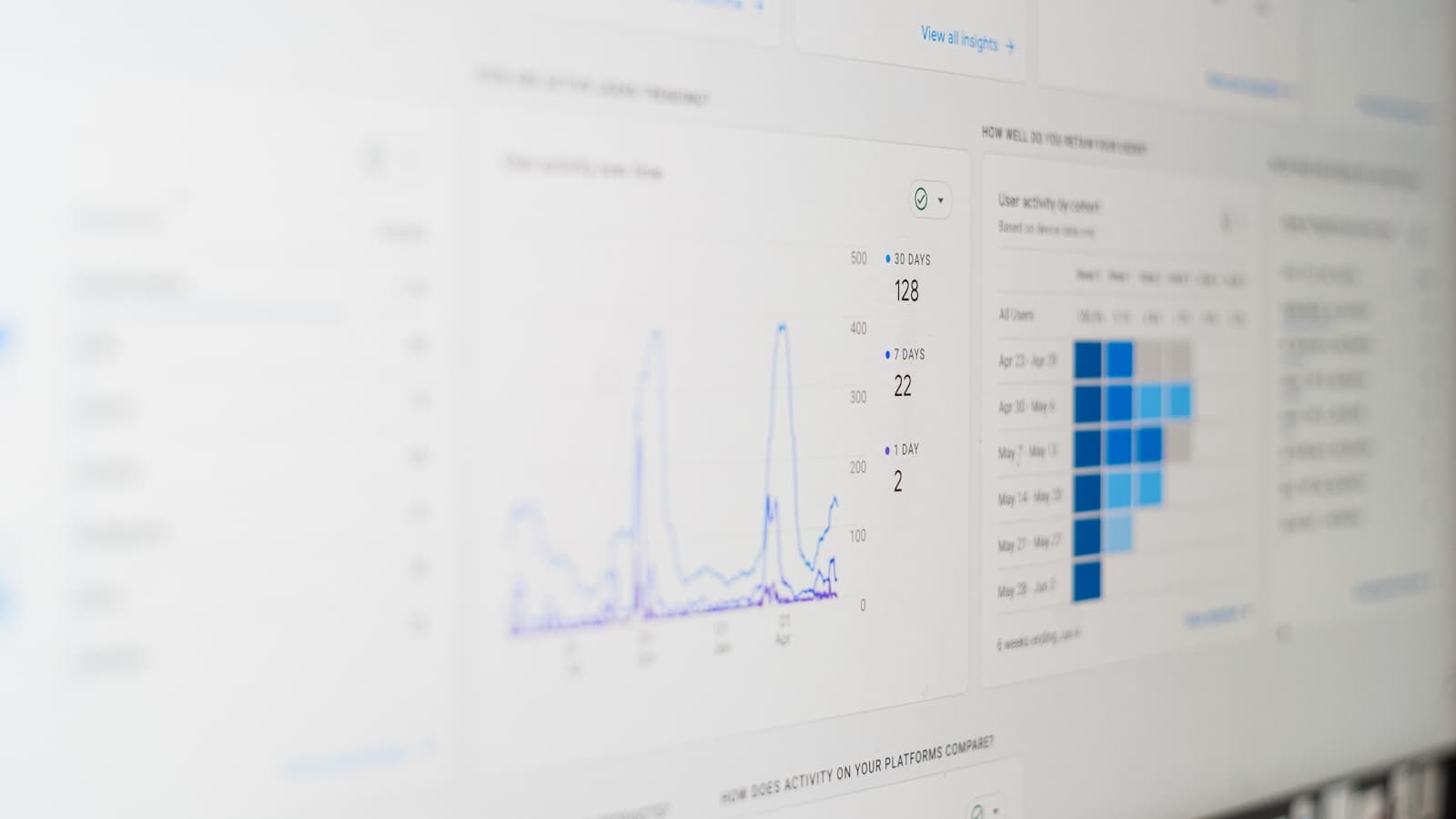
AI Overviews cut traditional Google clicks by 61%, according to Seer's 25.1 million-impression study. The traffic didn't disappear; it moved. ChatGPT, Perplexity and Google's own AI summary now intercept the question before the user ever clicks a link. For UK service businesses still chasing rank-1 in the ten-blue-links era, that is a margin call.
Answer Engine Optimisation, or AEO, is the response. Not a replacement for SEO, a layer on top of it. The technical foundations overlap, but the writing diverges, and the early movers are quietly stealing the citations their better-known competitors haven't noticed they've lost.
Below is what the data actually says, the five-stage retrieval pipeline AI search uses to choose what to cite, the levers that move the needle for a UK service business, and a 10-question scorecard to grade your own site.
AI Overviews cut clicks by 61% (the Seer 25.1M study)
When Seer Interactive analysed 25.1 million Google impressions across their portfolio of US and UK clients, the headline number was uncomfortable. On queries where Google now ships an AI Overview, organic click-through rates fell 61% on average. Position-1 listings used to convert at 39% click-through; post-AI-Overview, the same listings sit at around 15%.
The visitors haven't left search. They're reading the AI summary and either resolving their question right there or clicking through to one of the citations the AI elected to name. For a UK service-business website that ranked top-3 historically, the maths is simple. Either the AI cites you and you keep the traffic. Or it cites a competitor and you don't.
What changed: ChatGPT, Perplexity, Google AI Overviews in 2026
Three things converged in the last 18 months. ChatGPT shipped search functionality directly inside the chat interface, eliminating the trip to Google for tens of millions of weekly users. Perplexity went from niche to mainstream with its citation-first design, where every claim is footnoted to a named source. Google integrated AI Overviews into Search itself, so a generative answer now sits above the blue links on a growing share of UK queries.
The user behaviour split into three buckets:
- Asking ChatGPT or Perplexity directly, never touching Google. The traffic Google never sees.
- Reading Google's AI Overview and either clicking a citation or moving on without clicking anything. The 61% click decline lives here.
- Scrolling past the AI summary to the blue links. This still happens, mostly for transactional queries ("plumber near me", "dentist Manchester") where users want a phone number.
For a UK service business, the practical takeaway is that the top half of the funnel ("how does X work?", "what should I look for in a Y?", "is Z worth it?") is increasingly being intercepted by AI before the user ever sees your site. Either you're cited as part of that intercept, or you're losing pre-purchase mindshare you used to win with content marketing.
The 5-stage RAG pipeline AI search uses to pick citations
Every modern AI search engine, from ChatGPT to Perplexity to Google's SGE, runs on the same architectural pattern: retrieval-augmented generation, or RAG. Frase's research breaks the citation pipeline into five stages.
1 · Query understanding
The model classifies the user's question, expands it into related sub-questions, and decides whether grounded retrieval is needed. Most service-business queries trigger this path because users are asking for facts, not creativity.
2 · Document retrieval
The system pulls candidate documents from a search index. This is where traditional SEO rankings still matter, but indirectly. The AI doesn't cite the top-ranking page automatically; it retrieves the top 20-100 candidates and reasons over them.
3 · Chunk selection
From those candidates, the model selects specific chunks (often single paragraphs, sometimes individual sentences) that best answer the query. This is the level of granularity AEO actually plays at. A 3,000-word page can be reduced to one cited sentence, or zero.
4 · Synthesis and citation
The model combines retrieved chunks into a generated answer, attributing each claim back to its source. The chunks that survive into the final answer are typically the ones that are directly worded as facts, contain numbers, and come from high-authority entities.
5 · User trust and click-through
The user reads the AI's answer, scans the citations, and decides whether to click. The strongest visual citations (clear brand name, recognisable domain, pull-quote-able claim) are the ones that earn the click.
Why 90% of ChatGPT citations come from outside Google's top 20
Madhav Mistry's LinkedIn analysis of ChatGPT citation patterns surfaced one of the most important data points of the last year. When ChatGPT cites a source, 90% of the time the cited page is not in Google's top 20 organic results for the same query. Almost 9 in 10 citations are flowing to sites that traditional SEO would have buried.
90% of ChatGPT citations come from pages outside Google's top 20. So why are you still optimising just for Google?
ChatGPT citation analysis · LinkedIn study, 2025
The reason is structural. Google ranks pages on link authority, query intent, and a hundred other historical signals. ChatGPT, Perplexity, and the rest are reasoning over chunk relevance, entity consistency, and content structure. A small UK service-business blog with FAQ schema, direct-question H2s, and one good piece of original data can routinely beat a corporate site with 50,000 backlinks.
Almcorp's analysis of 1.2 million ChatGPT citations adds the spatial detail. 44% of citations come from the first 30% of any given page. The lede matters more than ever. AI search engines do not read your bottom-funnel CTA. They read your opening paragraph and form a citation from it, or move on.
The schema markup UK service businesses are missing
Most UK SMEs ship LocalBusiness schema and stop there. That is the single biggest AEO miss. The schema types that compound for AI citation, in order of leverage:
- FAQPage on every service page. AI search models preferentially cite question-answer pairs because they map cleanly onto a generated answer.
- Service on every service page. Tells the model exactly what you offer, with structured fields for areas served, pricing, and provider.
- Article and BlogPosting on every blog post. Author and publisher entities make the content attributable.
- HowTo for any process content (the 5 steps, the 10 things, the playbook). Direct AEO target.
- BreadcrumbList across the site. Cheap, high-signal context for both Google and AI search.
For a UK service business, this is the highest-leverage schema stack. Add it once, and every page benefits. AI search engines read structured data with very high confidence because it eliminates the guesswork of natural-language interpretation.
Interactive · Scorecard
Score your site against the 10 AEO levers
Ten yes-or-no questions. Two minutes. We compute your score, surface the three highest-leverage fixes, and email you the full priority ranked 90-day plan.
- / 01
Does every key service page have a visible FAQ block with FAQPage schema markup?
Not just any FAQ, one with structured data Google and AI search can parse.
- / 02
Are your H2 subheadings phrased as direct questions or noun-phrase facts?
Not adjective-led headings. AI search picks chunks by semantic match.
- / 03
Do you ship Service, Article, or BlogPosting schema beyond LocalBusiness?
Most UK SMEs ship LocalBusiness only and stop there.
- / 04
Do you publish original data, statistics, or case studies on your site?
Numbers with your name attached are the highest-value AEO content.
- / 05
Is your homepage value proposition summarised in plain English in the first 100 words?
ChatGPT citation studies show 44% of cited content comes from the first 30% of a page.
- / 06
Are your business name, address, founder name, and brand entities consistent across the web?
Wikipedia, LinkedIn, Google Business Profile, Crunchbase, your site. All matching.
- / 07
Have you been mentioned or cited by at least one third-party UK publication in the last 12 months?
Industry blogs, regional press, trade magazines, podcasts. All count.
- / 08
Is your core content crawlable text (not just images, video, or PDF)?
AI search engines can't cite what they can't read.
- / 09
Are your page titles and meta descriptions written for direct-answer queries?
Not 'Plumbing Services London', 'Emergency plumber in London, 60-minute response, fixed price'.
- / 10
Does your site have HTTPS, sub-2.5s LCP on mobile, and a clean mobile-first layout?
AEO is built on top of technical SEO. If the foundations are broken, the citations don't come.
Content patterns that get cited (with examples)
The structural patterns that survive into AI-generated answers are surprisingly simple. We've audited dozens of UK service-business pages that have started picking up ChatGPT and Perplexity citations. The patterns are consistent.
Pattern 1 · Question-format H2s
Pages where every H2 is phrased as a direct question ("How much does a missed call cost?") or a fact statement ("UK contractors lose £40,000 a year to missed calls") get cited two to three times more often than pages with adjective-led headings ("Our Approach", "Why Us").
Pattern 2 · Numbered claims with named sources
"Phone2 found 62% of business calls go unanswered" is a citation magnet. "Most calls go unanswered" isn't. AI search engines preferentially cite claims that combine a specific number with a named source, because those claims are easier to attribute back to a real entity.
Pattern 3 · Original data with your brand attached
The single highest-value AEO content is original research with your brand as the named source. "Kelso Creative analysed 50 UK plumber websites and found..." is an instant citation candidate. Run one piece of original research per quarter, even small samples, and the compounding effect on citations is significant.
Pattern 4 · Plain-language definitions in the first 100 words
AI search engines often cite the opening 100 words of a page when defining a term. If your service page leads with marketing fluff ("We help businesses unlock potential..."), the model has nothing to cite. If it leads with a clear definition ("A missed-call text-back is an automated SMS that fires within 60 seconds of a missed phone call..."), the definition gets cited and the brand goes with it.
How to measure AEO without enterprise tooling
You don't need Profound, EarlySEO, or Omnia at this stage. The manual approach is enough for most UK SMEs and gives you a better feel for how AI search is actually reasoning.
- Pick five buyer questions a prospect might type to find a service like yours.
- Ask each one in ChatGPT and Perplexity with search enabled.
- Note whether you're cited or named in the response. Even a passing brand mention without a link is worth tracking.
- Repeat monthly. The signal is the direction, not the absolute number.
- Track which content gets cited. Double down on whatever is winning.